

Building a Real Estate Website: Essential Features for Success
Understanding Buyer and Seller Needs
Identifying potential buyers, sellers, and renters is crucial. Therefore, understanding who you are trying to reach will shape your website’s content and features. A well-targeted website enhances engagement and increases conversions.
Tailoring Design to Audience Preferences
The demographics and preferences of your audience should guide your design choices. For instance, younger buyers may prefer a sleek, modern layout, while older clients might appreciate a more traditional design. Moreover, the site should be intuitive and visually appealing to ensure a seamless experience.
Providing Relevant Market Information
A successful real estate website offers valuable insights, such as local market trends, financing options, and community details. Additionally, including property comparison tools and mortgage calculators can enhance the user experience.
Establishing Your Website Goals
Setting Clear Objectives
Deciding whether your focus is on buyers, sellers, or renters is essential. As a result, you can tailor content accordingly. If your goal is lead generation, implementing forms and contact options will be crucial.
Showcasing the Right Properties
Selecting the right properties to feature will make your site more appealing. For example, if you specialize in luxury homes, ensure your listings reflect this niche with high-quality images and detailed descriptions.
Planning for Future Growth
A scalable website can evolve with your business. Therefore, consider integrating features such as AI-driven property recommendations, live chat support, and enhanced search filters to accommodate future growth.
Analyzing Competitor Websites
Learning from Market Leaders
Reviewing top real estate websites provides insights into effective design and functionality. Furthermore, identifying best practices can help you refine your strategy.
Identifying Market Gaps
Recognizing unmet needs in the market allows you to differentiate your site. For instance, if local school information is missing from competitors’ sites, integrating such data can be a unique value proposition.
Avoiding Common Pitfalls
By understanding competitors’ weaknesses, you can avoid mistakes and refine your approach. Additionally, monitoring user feedback can help in making continuous improvements.
Essential Design Elements for User Experience
Responsive and Mobile-Friendly Design
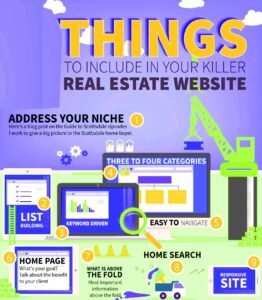
Since many users search for properties via mobile devices, mobile optimization is crucial. Therefore, using frameworks like Bootstrap or responsive WordPress themes ensures a seamless experience across all devices.
Intuitive Navigation Structure
A clear menu and search functionality improve user experience. Moreover, breadcrumbs and filters help users navigate efficiently, reducing frustration.
Visual Appeal and Branding
A consistent color scheme, high-quality images, and compelling videos enhance credibility. Additionally, virtual tours and drone footage can provide an immersive experience
Key Functional Features to Include
Property Listings and Search Functionality
Detailed property descriptions, price filters, and sorting options enhance user engagement. In addition, features like saved searches and property comparisons add convenience.
Interactive Maps and Location Information
Integrating maps helps users visualize property locations. For example, highlighting nearby schools, parks, and amenities adds value to listings.
User Accounts and Personalization
Allowing users to register for accounts enables personalized experiences. Furthermore, features like tailored property alerts and saved searches encourage return visits
Integrating Marketing and Lead Generation Tools
Contact Forms and Call-to-Action Buttons
User-friendly contact forms and well-placed call-to-action buttons guide visitors toward making inquiries. Additionally, clear messaging improves conversion rates.
Email Marketing Integration
Building an email list for newsletters and updates enhances engagement. For instance, automated campaigns can provide relevant property recommendations to potential buyers.
Social Media Integration
Linking social media profiles and encouraging content sharing increase visibility. Moreover, showcasing testimonials and client reviews builds trust.
Ensuring Security and Compliance
Implementing SSL Certificates
Website security is essential for user trust. Therefore, securing data with an SSL certificate enhances both credibility and SEO rankings.
Compliance with Real Estate Regulations
Understanding local real estate laws and fair housing regulations ensures legal compliance. Additionally, transparent disclaimers build trust with users.
Regular Maintenance and Updates
Keeping the website updated ensures long-term success. As a result, regular backups, security checks, and performance monitoring should be part of your strategy.
A successful real estate website requires a combination of intuitive design, strong functionality, and effective marketing. By continuously improving based on user feedback and market trends, you can stay ahead in the competitive real estate industry.
FAQs
- What are the most important features for a real estate website?
- How can I improve user experience on my real estate site?
- What tools can I use to build a real estate website?
- How do I ensure my website is secure?
- What marketing strategies should I implement for my real estate website?